
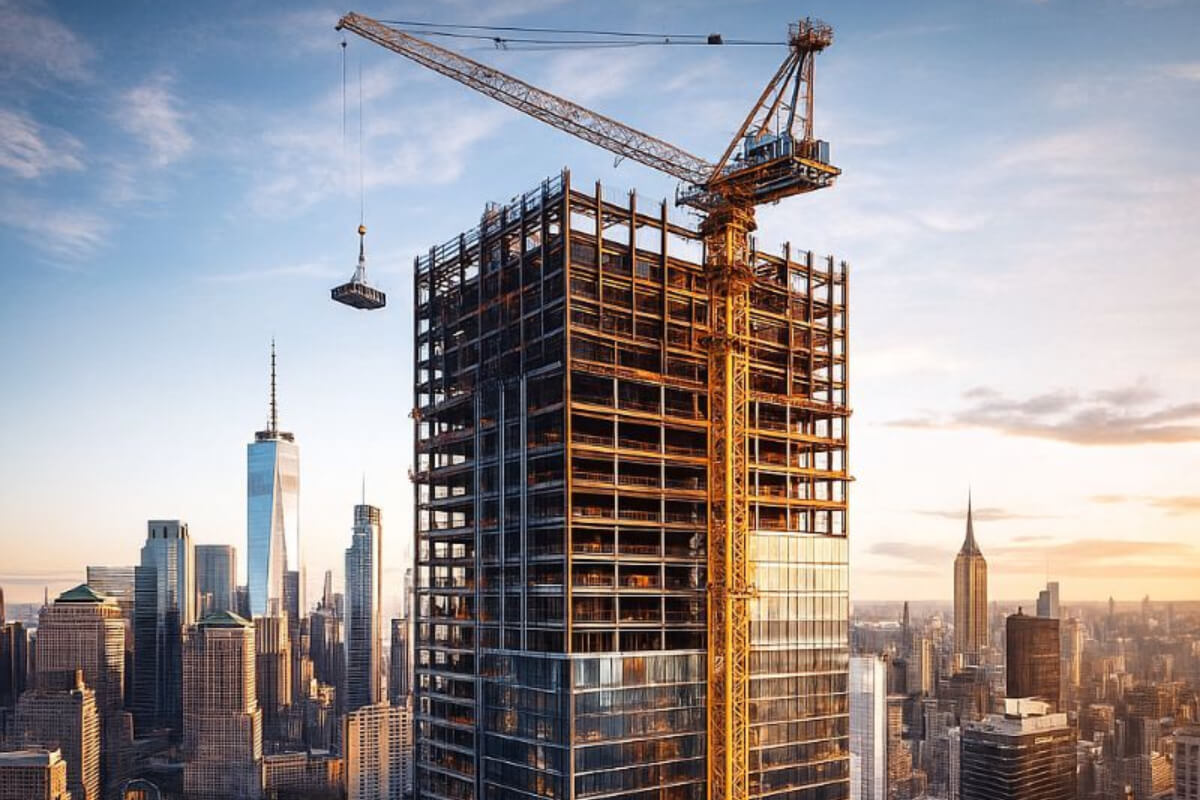
The Manhattan Financial District Tower stands as one of New York City’s most ambitious commercial developments of the decade. Rising 78 stories, this skyscraper brings together advanced structural engineering, sustainable materials, and cutting-edge mechanical systems designed to support the evolving needs of global financial institutions and high-profile commercial tenants.
Scheduled for completion in 2027, the tower will become a new architectural landmark in Lower Manhattan.
Project Overview
This high-rise megaproject involves:
- Deep foundation caisson and slurry wall systems
- High-strength structural steel frame construction
- Low-carbon concrete to reduce embodied emissions
- Advanced curtain wall façade with energy-efficient glazing
- Integrated smart building technologies
When completed, the tower will offer 2.3 million square feet of premium commercial office and amenity space.
Foundation & Substructure Engineering
Building a skyscraper in the Financial District requires specialized foundation systems due to:
- Dense surrounding structures
- Historic underground utilities
- High groundwater levels
- Soft soil overlays above Manhattan bedrock
Key Achievements
- Installation of 120+ caissons drilled up to 185 ft deep
- Construction of slurry walls to protect adjacent buildings
- Pumping and groundwater control systems for excavation
- Use of seismic base-isolation bearings for long-term resilience
The foundation phase was completed 2 months ahead of schedule.
Structural Steel Construction
The tower’s superstructure consists of a high-strength steel frame designed for:
- Extreme wind loads
- Long-span interior office floors
- Seismic events
- Optimized weight-to-strength ratio
Highlights
- Over 48,000 tons of structural steel installed
- Use of mega-columns for load distribution
- Accelerated floor-cycle sequencing (3–4 days per floor)
- Real-time digital surveying for alignment
The optimized sequencing significantly reduced crane idle time and streamlined material deliveries.
Curtain Wall & Exterior Systems
The tower features a next-generation façade engineered for performance and sustainability.
Features
- Triple-pane low-emissivity glazing
- Recycled aluminum framing
- Automated solar shading technology
- Enhanced wind-load resistance
These systems are expected to reduce annual HVAC energy consumption by 28%.
Interior Construction & MEP Systems
Interior build-outs include:
- High-efficiency HVAC systems
- Raised access flooring for flexible office layouts
- Smart lighting and occupancy sensors
- Fire-rated partitions and life-safety systems
- High-capacity elevator groups with regenerative braking
Mechanical, electrical, and plumbing systems are coordinated using full BIM integration.
Heavy Equipment Fleet
Construction of the tower requires specialized vertical-construction equipment:
- 3 Tower Cranes (700–1000 ft hook height)
- Mobile Cranes for steel placement
- High-reach boom lifts
- Concrete pumping systems
- Material hoists and jump forms
Telematics ensures precise crane coordination and load-path analytics for superstructure operations.
Workforce & Safety
- Peak workforce: 620 personnel
- Safety rating: 98.7% safe-work compliance
- Lost-time incidents: Zero
- Weekly safety audits and high-rise training modules
- On-site wind monitoring systems for crane shutdown alerts
Safety protocols exceed NYC DOB and OSHA requirements.
Sustainability & Environmental Leadership
The project targets both LEED Platinum and WELL Building Standard certifications.
Sustainability Measures
- Low-carbon concrete mix
- Renewable material sourcing
- Energy-efficient façade design
- Rainwater harvesting systems
- Waste diversion rate of 92%
Schedule Performance
Despite working in one of the busiest construction zones in the U.S.:
- Foundation completed early
- Steel erection on schedule
- Curtain wall installation progressing floor-by-floor
- MEP integration ahead of baseline timeline
The project remains aligned with the 2027 completion target.
Economic Impact
The tower is projected to contribute:
- 4,800+ direct and indirect jobs during construction
- Long-term premium office space for global finance firms
- Increased tax revenue for New York City
- Expanded commercial ecosystem in Lower Ma