
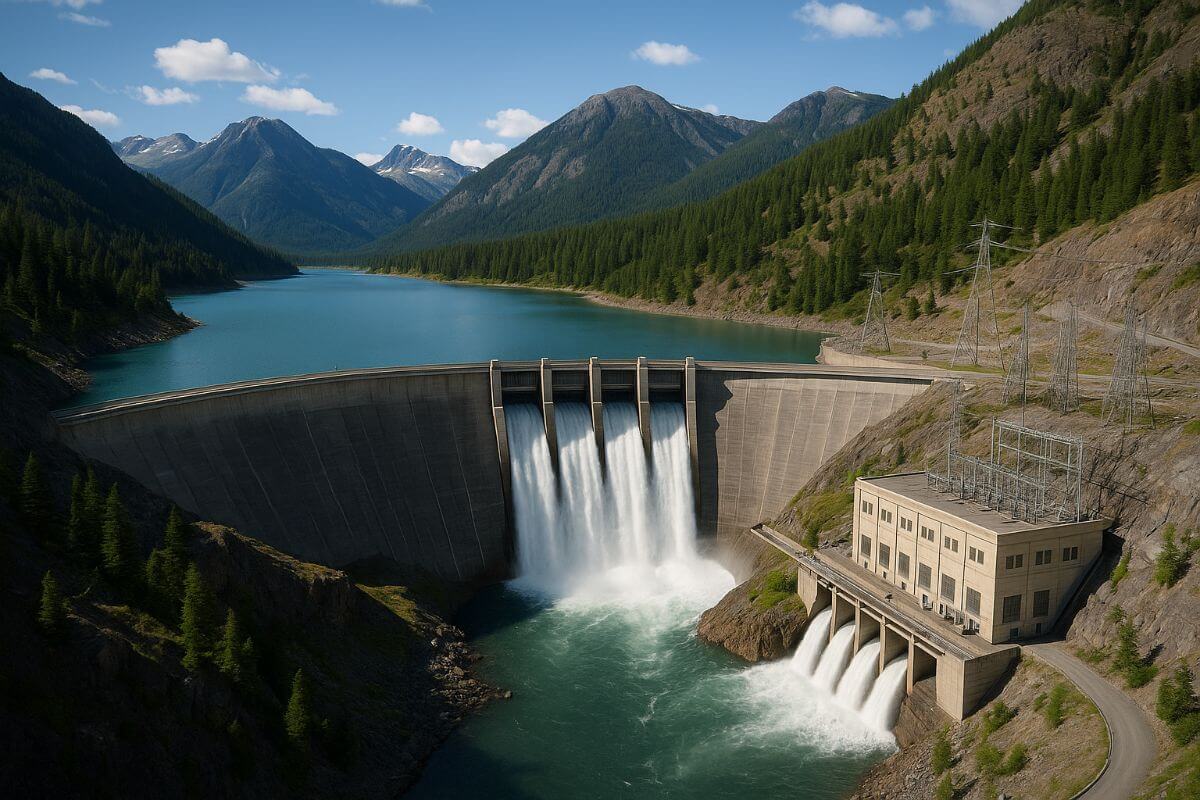
The Rocky Mountains Hydroelectric Dam is one of the most ambitious renewable energy projects in the western United States. Designed to harness the natural power of the Colorado River Basin, the facility will provide clean, reliable electricity to over 450,000 homes while supporting long-term water management and environmental stability.
Nestled deep in the Colorado Rockies, this megaproject required innovative engineering solutions, extensive earthworks, and specialized heavy-equipment operations capable of performing in extreme mountain conditions.
Project Overview
The hydropower project integrates multiple engineering components:
- Main Concrete Dam Structure (260 ft height)
- Powerhouse Facility with 5 high-capacity turbines
- 1.8-mile intake and spillway tunnels
- Energy distribution substation
- Environmental mitigation zones
- Improved access roads through steep terrain
Once completed, the dam will generate an estimated 1.2 GW of clean hydropower.
Excavation & Foundation Works
Working in the rocky terrain demanded precision drilling, blasting operations, and large-scale excavation using:
- 18 Hydraulic Excavators (30–70 ton)
- 9 High-power Dozers
- 12 Articulated Dump Trucks
- 4 Rock Drilling Rigs
- 6 Compactors
Key Achievements
- 1.9 million cubic yards of rock excavated
- Deep foundation shafts drilled into granite bedrock
- Slope stabilization using rock bolts and shotcrete
Dam Construction
The dam’s massive concrete structure requires advanced batching and continuous placement systems.
Highlights
- 650,000 cubic yards of concrete placed
- On-site low-heat concrete mixing for thermal control
- Continuous pour operations lasting up to 18 hours
- Real-time temperature monitors embedded in core segments
Tunnel & Waterway Engineering
The project includes two major tunnels:
- Intake Tunnel – directing water through the powerhouse
- Emergency Spillway Tunnel – designed for 10,000-year flood events
We deployed tunnel-boring machines (TBM), controlled blasting, and ventilation systems to complete excavation safely.
Innovations
- GPS-guided tunnel alignment
- Moisture-resistant concrete liners
- Automated muck removal systems
Powerhouse Construction
The powerhouse will house five advanced hydropower turbines, each capable of powering more than 90,000 homes.
Scope of Work
- Turbine foundation construction
- Crane-installed generator housings
- Electrical infrastructure placement
- Vibration isolation systems
Environmental Stewardship
Given the delicate ecosystem of the Colorado Rockies, environmental compliance was a top priority.
Measures Implemented
- Fish and wildlife migration corridors
- Sedimentation control systems at river interfaces
- Air quality and dust monitoring
- Reforestation and habitat restoration zones
Zero violations have been recorded to date.
Heavy Equipment Fleet
To operate in high-altitude, steep terrain, specialized machines were deployed:
- 20 Excavators (30–70 ton class)
- 12 Bulldozers (D7–D10)
- 10 Articulated Haul Trucks
- 8 Rock Breakers
- 5 Tower Cranes
- 4 TBM Support Units
- 13 Support Vehicles (loaders, telehandlers, service trucks)
Fleet telematics ensured optimized fuel management, maintenance scheduling, and cycle-time efficiency.
Workforce & Safety
- Peak workforce: 520 personnel
- Total work hours: 1.6 million
- Safety performance: Zero lost-time incidents
- High-altitude training required for all field staff
Strict adherence to OSHA and hydropower safety standards ensured a safe and reliable project environment.
Schedule Performance
Despite challenging terrain and unpredictable weather:
- Foundation work completed 5 weeks ahead of schedule
- Tunnel boring is 12% ahead of baseline productivity
- Concrete placement remains on-target for Q3 2026
No significant delays have impacted the critical path to date.
Economic & Environmental Impact
Once operational, the hydropower facility will:
- Provide clean energy to 450,000+ homes
- Reduce regional carbon emissions by 1.1 million tons annually
- Support long-term water management for agriculture
- Boost local and regional employment
The project sets a new benchmark for sustainable infrastructure in mountainous terrain.
Client Feedback
“Constructors’ performance on this project has been exceptional. Their expertise in complex terrain, safety leadership, and environmental stewardship has far exceeded expectations.”
— Karen Holbrook, Senior Project Director, US Bureau of Reclamation
Awards & Recognition (Projected)
- ENR Best Project – Energy/Industrial Category
- ASCE Outstanding Civil Engineering Achievement
- ACE Green Infrastructure Leadership Award
Looking Ahead
As the Rocky Mountains Hydroelectric Dam advances into its final phases, Constructors continues to push engineering boundaries, applying innovative construction techniques tailored for high-altitude, environmentally sensitive environments.
This project demonstrates our commitment to renewable energy and the future of sustainable infrastructure in the United States.
Planning a large-scale energy or infrastructure project?
Our team is ready to support your vision from concept to completion.